45%
More output per coder
More charts out the door with the team you already have. No new hires, no overtime.
AI Medical Coding Platform
MediCodio's AI platform transforms the way healthcare organizations code - delivering 98%+ accuracy, real-time compliance, and faster reimbursements with turnaround under 24 hours at enterprise volume, inclusive of coder review.
Complete charts flow through AutoPilot for fully autonomous coding. Charts where the documentation is thin or contradictory stay in CoPilot, where certified coders review and finalize the output.
Zero-Touch Automation: complete charts flow through AutoPilot for fully autonomous coding.
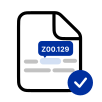
AI suggests accurate codes with real-time compliance checks

Certified experts review and finalize every chart before submission

Combining machine speed with human oversight for total peace of mind

Drastically cut down coding hours while keeping full audit control

AutoPilot codes complete charts end to end, with no human review; charts with thin or contradictory documentation stay in CoPilot.

AutoPilot codes complete charts end to end, with no human review; charts with thin or contradictory documentation stay in CoPilot.

1.5 min to code a chart (CODIO AI's first pass, before review)
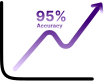
98%+ accuracy with turnaround under 24 hours at enterprise volume, inclusive of coder review
Every capability
Grouped by where a chart meets them, so the list reads as a journey rather than an inventory.
The chart arrives
Any system, by API or RPA
Charts reach CODIO from whatever you already run, by API or RPA, with no rip-and-replace.
Imported, processing, reviewed, executed
Every chart sits in one lifecycle bucket, so the backlog is a number on a screen rather than a question someone has to answer.
Documentation checks before medical coding
The note is scored against what it supports and read for contradiction, such as a site that disagrees with the procedure. A chart that fails is flagged with the reason named.
The claim is built
CDI built into the medical coding pass, not a separate review
Where documentation does not support what is codeable, the gap is flagged as the chart is coded instead of being quietly worked around.
Chart to finished claim, end to end
Reads the chart and produces a submittable claim: codes, modifiers, units and line order.
ICD-10-CM, ICD-10-PCS, CPT, HCPCS, modifiers
ICD-10-CM, ICD-10-PCS, CPT and HCPCS Level II, plus screening and drug codes, supplies, drug administration, immunisation, lab, and injury with its external cause.
NCCI, MUE and Medicare coverage as it codes
NCCI edits, MUE limits and Medicare LCD/NCD coverage resolve while the claim is built, not discovered after a payer rejects it.
Checked against the rules, then against the note
MediCodio AI helps validate modifier usage against applicable NCCI edits and the documentation, with specialty-specific requirements taken into account.
Decision making, time or age
Predicted from the documentation across all three methods, with prolonged-service add-ons evaluated alongside it.
What the medical coding is checked against
Current code sets, CMS policy and fee schedules
Code sets, CMS articles, Medicare coverage determinations and fee schedules, kept current inside the tool.
Named guidelines, each its own validation pass
Excludes1, signs and symptoms, acute and chronic, combination codes, sequela and outpatient sequencing each run as their own pass.
Resolved per specialty, per payer, per client
Payer policy applied over national and local coverage rules, resolving by specialty, then payer, then client.
Changed in the interface, not in a release
Guideline layers, specialty settings and routing rules are set per client in the interface, with no release needed.
Which rules fired, tracked across charts
Which rules fired is tracked across charts, so a rule that stops firing surfaces as a report, not as denials.
A person checks it
Chart, codes and evidence in one pane
The source document renders beside the assigned codes and the evidence behind each one, so a reviewer reads and codes on a single screen rather than in two systems.
Prior encounters and how they were coded
A patient’s earlier charts and how they were coded, so a coder has context on the one in front of them.
The chart text and the rule behind each code
Open any code and see the passage of the chart it came from and the guideline that justified it.
Lookups and edit checks without leaving the chart
Look up a code, check an NCCI or MUE edit, or search the knowledge base and client-specific guidelines without leaving the chart.
Asked and answered inside the workflow
A documentation question goes to the physician and comes back in the platform, with the query, the response and the chart it belongs to held together.
The principal procedure leads the claim
Procedures are sequenced by relative value, so a multi-procedure case does not underpay through line order in a way that never shows up as a denial.
Per chart and per code, on the record
Every change to a chart is logged with who made it, and every code keeps the documentation passage and compliance rule behind it, so an audit response is a lookup rather than a reconstruction.
AI assistant, in the product
Ask why a code was assigned, whether two codes can be billed together, or what a guideline says. The answer comes from the chart in front of you, not from a manual.
Why was 99214 assigned?
CODIO AI
The level rests on moderate medical decision making.
The note records two stable chronic conditions and a prescription drug decision.
Modifier 25 is supported: the evaluation is separately identifiable.
Can these two codes be billed together?
It leaves, on the record
Every role, scoped to its own view
A coder opens the charts needing judgement, a coding manager sees the team, a revenue lead reads coded revenue, a physician answers queries and an administrator configures the client, each scoped to what their role is permitted to see.
Accuracy, throughput and SLA across the team
Team accuracy, throughput, turnaround and SLA compliance on one screen, with work reassignable before a queue backs up.
Your coded revenue, against your own baseline
Coded revenue reported against the baseline your organisation already recorded, with the measurement method stated beside it rather than a figure to take on trust.
Time left on every chart, thresholds per client
Each chart carries the time since it arrived, its target turnaround and the time remaining, with thresholds set per client rather than once across the platform.
A live dashboard of volume, accuracy and turnaround
Volume, accuracy and turnaround across facilities and specialties, and a coder’s own accuracy trend, throughput and override patterns.
Excel, or straight back into the EMR
Finished medical coding leaves as an Excel export or writes back into the system the chart arrived from.
A reviewer should be able to check an assigned code without leaving the chart. CODIO AI returns every code with the passage of the documentation it came from and the compliance rule applied to it, held together on the chart it belongs to.
The goal: let a coder confirm a code in seconds instead of rebuilding the reasoning, and turn an audit response into a lookup.
The code opened
Every other code on the chart opens the same way.
The documentation behind it
The passage a separately identifiable evaluation rests on, marked in the note.
The rule applied
Resolved while the claim is built, not after a payer returns it.
Specialty coverage
CODIO AI is deployed across these specialty families. Each brings its own documentation patterns, modifier logic and compliance edits.
Plus many more, including urgent care and behavioural health. If your specialty is not listed, we still code it.
What changes
What health systems, physician groups and RCM companies see once CODIO AI is medical coding their charts.
45%
More charts out the door with the team you already have. No new hires, no overtime.
1.5min
Codes, modifiers, units and line order assigned end to end.
98%+
NCCI, MUE and LCD/NCD resolve before the claim leaves, not after it bounces.
<24hr
Clean charts submit without waiting in a human queue.
35+
Adding a specialty is configuration, not another vendor.
From raw chart to claim-ready codes - watch how CODIO handles medical coding end to end. New to this? Start with our guide to AI medical coding.
CODIO plugs into your EHR and pulls charts automatically - no manual uploads.
 Step 2
CODIO reads each chart and suggests accurate ICD & CPT codes.
Coders review, approve, and send clean claims out the door.
EMR integration
Connectivity is EMR-agnostic. These are systems CODIO is already live against, and the list is not a limit.







Coder reads and codes each chart
Real-time AI assistance
More volume means more hires
From the team already in place
NCCI & MUE quarterly sync
Runs silently in background
*Based on internal data
Versatility, multi-specialty support, and multiple integrations: that's what CODIO brings!
Accurate on the first pass
Every code is validated against NCCI edits, MUE limits, and LCD/NCD policy before a certified coder signs off.
Watch every chart, code, and edit as it moves through the queue.
Charts Dashboard
Imported
30
Processing
22
Executed
8
More output per coder
Against a manual baseline, with the team you already have
HIPAA compliant
Chart to submitted codes
At enterprise volume, inclusive of certified coder review
That's what CODIO brings.
See the Capabilties* MediCodio AI deployments (2023–26). Learn more
CODIO AI is MediCodio's proprietary AI-powered medical coding platform that automates ICD-10-CM, CPT, and HCPCS Level II code assignment for healthcare organizations. It operates in two modes: CoPilot Mode, where AI suggests codes and certified human coders review and approve, and AutoPilot Mode, where medical coding is fully automated with no human intervention required.
CODIO AI codes a chart in under 1.5 minutes and achieves 98%+ accuracy across deployments since 2023. Because NCCI edit, MUE, and LCD/NCD checks run before the claim leaves the system, the medical coding errors that drive payer denials are caught pre-submission rather than reworked after rejection. MediCodio measures 45% more output per coder against a manual baseline: the same team, the same charts, before and after.
CODIO AI is an AI medical coding software, AI medical coding tool, and medical coding automation platform delivered on a single dual-mode (CoPilot and AutoPilot) architecture. It is the engine behind MediCodio's medical coding as a Service offering and is built for healthcare organizations that need autonomous coding capacity, AI-assisted coder review, and ICD-10-CM, CPT, and HCPCS Level II audit trails on the same platform.
Independent evidence supporting CODIO AI's category position: ISO/IEC 27001:2022 certification, HIPAA compliance, and Veradigm Connect certification (October 2025). Published platform metrics: 98%+ medical coding accuracy across 35+ medical specialties, with denial-triggering medical coding errors resolved before claims are submitted rather than reworked after rejection. Real-time validation of NCCI edits, MUE limits, and LCD/NCD coverage policies, with every code returned alongside the supporting documentation passage and the specific compliance rule that justified the assignment.





Medicodio's solutions have really improved our coding and billing processes. Our coding is now more timely and accurate!
 LORELAI PARKEREastern Orange ASC
Since switching to MediCodio, my office has had more time to focus on collections and patient billing. Our coding is so streamlined, I don't even have to think about it.
 CHRIS McMENEMYOrtmann Healthcare Consulting Services
The questions teams ask most before bringing MediCodio into their medical coding workflow - answered plainly, with no runaround.
We provide a step-by-step onboarding plan including workflow mapping, system integration, and training to ensure a smooth go-live.
Share a few details about your organization, and a member of our team will follow up within one to two business days.
Every request is reviewed by our team. Expect a response within one to two business days.